CAJUN ELECTROSTATIC’S disinfection process employs ELECTROSTATIC SPRAYING, a proactive approach toward eliminating infectious bacteria or viruses including (but not limited to) coronavirus, H1N1, HIV, staphylococcus, hepatitis, norovirus, streptococcus, salmonella, influenza and rihnoviruses.
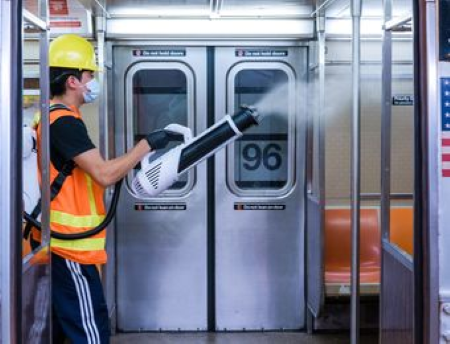
What Is Electrostatic Disinfection?
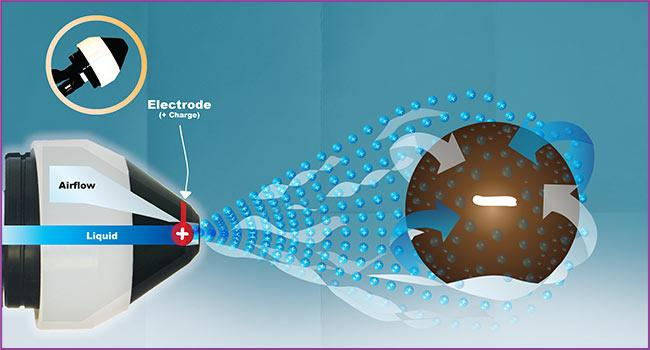
Electrostatic disinfection is a process that sprays an electrostatically charged mist onto surfaces and objects. Electrostatic spray uses a specialized solution that is combined with air and atomized by an electrode inside the sprayer. The spray contains positively charged particles that aggressively adhere to surfaces and objects. The particles in the spray are positively charged and coat any surface they are sprayed on.
Particularliy effective for awkwardly shaped objects or hard to reach places, cleaning staff only have to point and spray. The mist coats surfaces evenly and envelopes objects, even if the mist is only sprayed from one side. After the spray is applied, the sanitizing agent works to disinfect the covered surfaces. For this reason, electrostatic spray is an excellent solution for germ and contaminant ridden areas.
How Does Electrostatic Disinfection Work?
Electrostatic spray is electrically charged, insuring that the appropriate sanitizers, mold preventatives and disinfectants wrap around and evenly coat all types of surfaces. As the disinfecting solution exits the electrostatic sprayer, it’s given a positive electrical charge. The droplets then become attracted to all negative surfaces, covering the visible area, underside and backside, with the sanitizing agent. Surfaces that are already covered will repel the spray, making the method extremely efficient. Products used are hospital grade and approved by the EPA.
This process has a 99.99% kill rate of bacteria and viruses, and is applied by certified technicians.
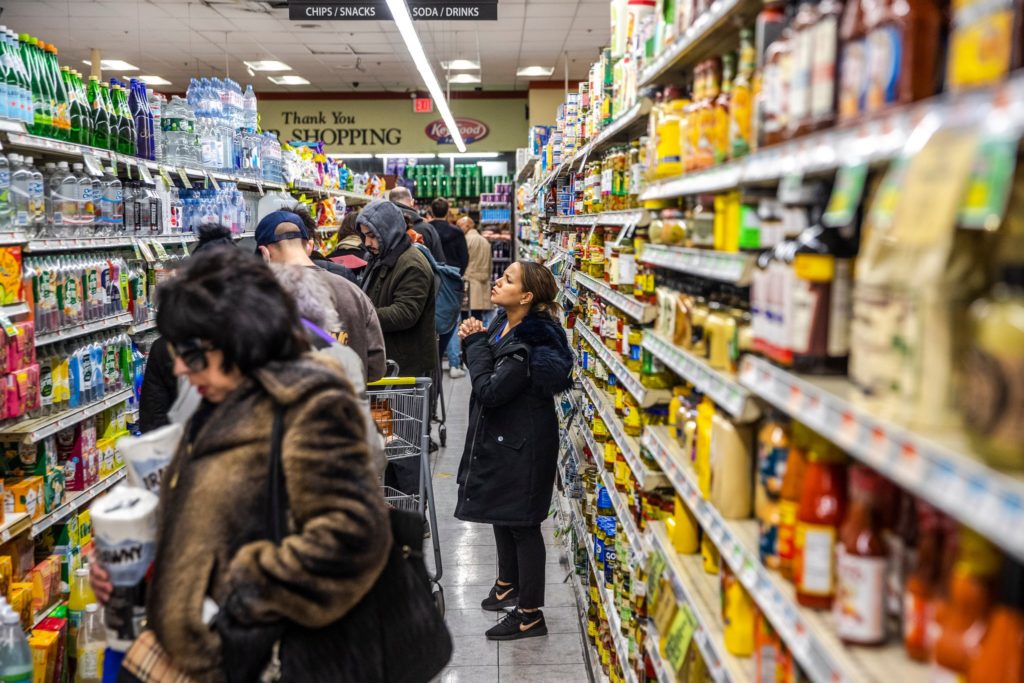
Who is at Risk? Everyone!
From children to our pets to our elderly, we are all at risk!
Daycares and schools • athletic facilities and gyms • offices and stores • food processing • restaurants and grocery markets • trains, planes and buses • hotels and cruise ships • shipping and boats of all types • theatres • amusement parks • hospitals • medical facilities • first responders • agriculture • animal care
Even residential homes are all known to spread infectious diseases, as well as exposure to mold and allergens.
CAJUN ELECTROSTATIC’s disinfection process is centered around the use of ELECTROSTATIC SPRAYING systems, a highly effective and proactive disease prevention technique employed to attack bacteria and viruses.
Cajun Electrostatic’s Proactive Disease Prevention Solution
We use a sustainable, solid tablet form of Sodium Triclosene, NaDCC, which dissolves readily in water to become a powerful hypochlorous acid (HOCL) that is versatile enough,depending on concentration, to use as a food surface sanitizer and a hospital grade disinfectant. If you aren’t aware of the many benefits of HOCL, it’s time you were. This multi-tasking, EPA registered sanitizer/disinfectant, when coupled with green cleaning formulations and the right application technology, literally SOLVES the time constraints and process problems of daily cleaning and sanitizing/disinfection.

The Science Behind (NaDCC HOCL)
The active agent in is sodium troclosene (NaDCC). While it does provide chlorine in the form of hypochlorous acid (HOCL) for sanitizing and disinfection purposes, it is not a hypochlorite like chlorine bleach. The chemistry and mode of action of NaDCC is significantly different, producing a solution that is stable once diluted, particularly in the presence of organic contaminants.
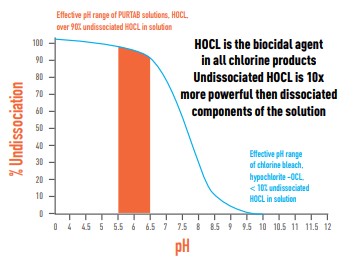
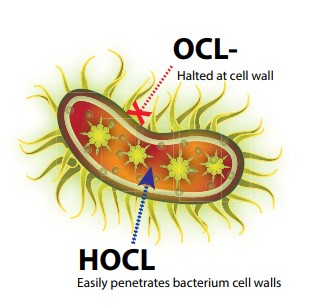
Studies show that HOCL has four times the antimicrobial killing power of hypochlorites (-OCL). It is believed that this is due to the fact that HOCL is very similar to the structure and molecular size of water and is electrically charged—thus allowing it to penetrate cell walls as easily as water. Conversely, the hypochlorite ion is electrically charged and thus has a harder time getting through the cell wall.
What are infectious diseases costing?
- In the U.S., infectious diseases are associated with an economic burden of over $120 billion
- The projected loss of earnings due to the illness was approximately $16.3 billion annually
- Last year, Americans missed more than 70 million workdays because of the flu
- Reports estimate that employers lost $10.4 billion in direct costs during each flu season
- Antibiotic resistant infections cost Americans $20 billion in direct medical costs and $35 billion in lost productivity
- 60 million school days are lost each year to colds and flus in the U.S.